From Bland to Brilliant: How to Revise Your Grant Narrative So It Wins
A proposal writer’s revision playbook
Let’s take a look at the key practice of revising your proposal once you’ve written the first draft. Compelling proposal writing swaps jargon for specifics, weaves in real voices, and turns a competent draft into one program officers remember.
Your first draft of a proposal is often decent. The problem is the second draft that looks too much like the first.
It’s easy to write a competent first draft and then make small edits around the edges. We tighten a sentence here, swap a word there, and fix a few transitions. What we end up with is a tidier version of the original.
But adequate doesn’t win grants. Compelling does. Let’s walk through the essentials of making strong revisions.
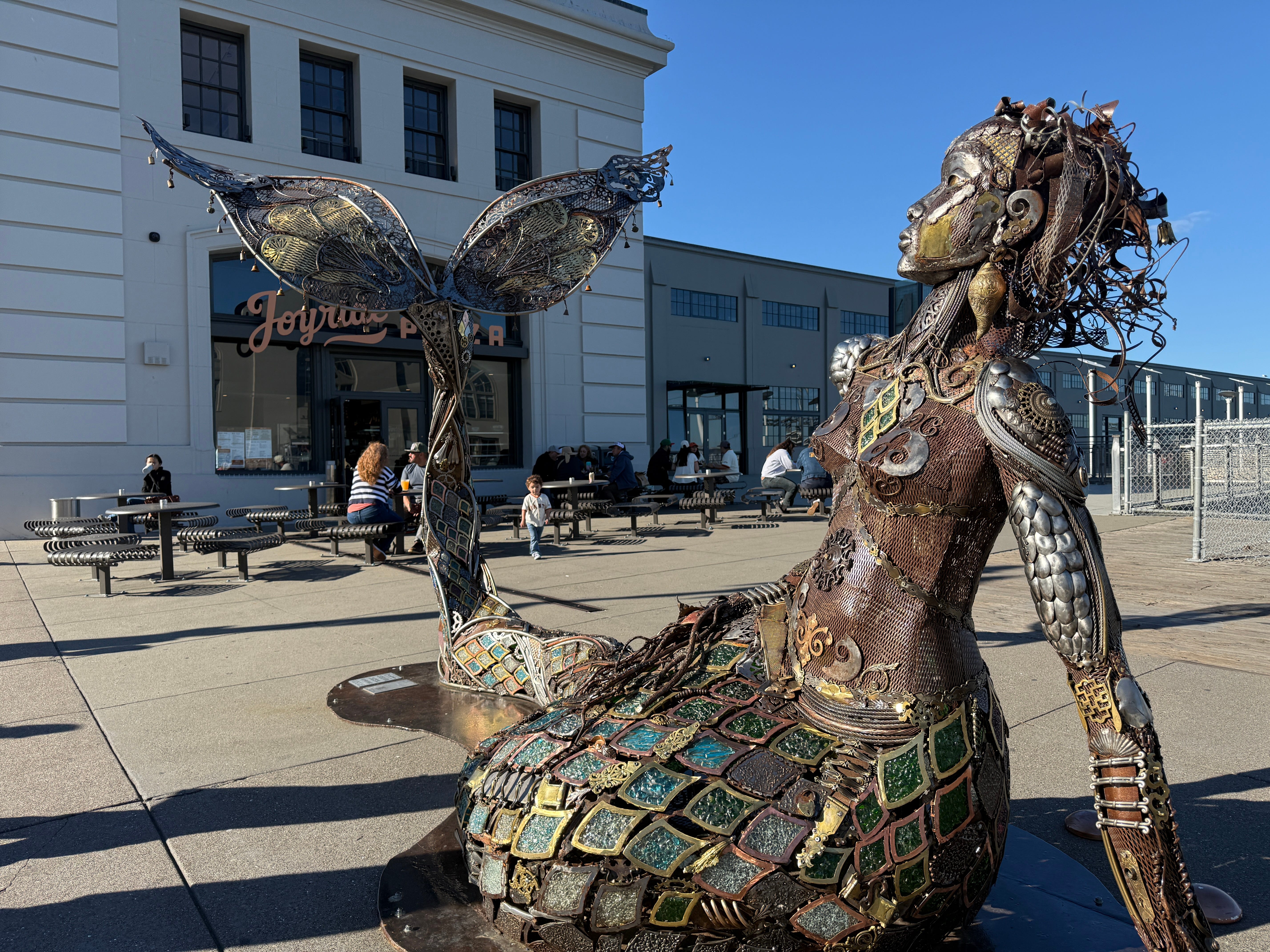
Iron Mermaid - public art on the San Francisco waterfront © Tonya Hennessey
One of the Most Common Problems: Abstraction
Here’s a sentence pulled from a real grant proposal (with details changed): “Our program serves vulnerable youth in under-resourced communities by providing wraparound support services that address the root causes of educational inequity.”
Read that again. What do you actually know after reading it? Not much. Who is being served, and how many of them? Where? What does “wraparound support” mean in practice? What root causes? That sentence could describe thousands of programs, and it makes none of them feel real.
Now consider this revision: “Each year, our program provides 60 high school students from New York’s Iron Triangle neighborhood with paid conservation internships, weekly mentorship, and college application coaching, all while they earn an industry certification in environmental science.”
That sentence tells a story. It has numbers, geography, and activities you can picture. It makes the program tangible. Specificity is the single highest-leverage move you can make in a grant revision, and the good news is that it’s available in every draft you write.
Bring in the Voice of the People You Serve
Program officers are human beings, and human beings respond to human stories. An institutional narrative, with all statistics and outcomes but no people, reads like a report rather than a proposal. It informs, but it doesn’t move.
The fix isn’t to manufacture sentiment. It’s to use the real voices you already have access to. A direct quote from a program participant, gathered with consent, can do more work in two sentences than two paragraphs of organizational description.
Before: “Program participants report increased confidence and improved academic performance.”
After: “‘I didn’t think college was for me until this program,’ says Marcus, who completed the internship last summer and is now enrolled in community college. ‘For the first time, I felt like I was good at something that mattered.’”
That revision costs you nothing except the time it takes to collect the quote, and it changes everything about how the narrative lands.
Cut the Jargon (All of It)
Every sector has its jargon, and the nonprofit sector has more than most. Wraparound services. Capacity-building. Systems change. Holistic approach. Two-generation model. Equity-centered framework.
These terms aren’t inherently wrong, but they’ve been so overused that they’ve lost most of their meaning. When program officers see them, their eyes glide over the words rather than stopping to engage with what’s underneath. Jargon is the enemy of specificity, and specificity helps win grants.
The revision move is simple: replace every piece of jargon with a concrete description of what you actually do. Don’t say “capacity-building.” Say “we train program staff in trauma-informed facilitation and provide monthly coaching from a licensed social worker.”
Describe what capacity-building means in your context. Say it plainly, painting a picture so the reviewer can visualize your program.
The Opening and Closing: Where You Win or Lose the Room
Program officers are busy and are reading through 10s or even 100s of proposals, depending on the foundation’s size. That means your opening and closing paragraphs get more attention than anything in the middle. Your opening sets the tone and signals to the program officer whether this proposal will be worth their time. Your closing is the last thing they carry with them when they put the application down.
Openings that work tend to share a few features. They might offer a specific, vivid scene, or a striking statistic followed immediately by its human implication. Sometimes they pose a question that the proposal then answers, or open with a brief story that encapsulates the problem you’re trying to solve.
Openings that don’t work sometimes sound like this: “Our organization was founded in 1998 with a mission to…” Nobody opens a great novel with a legal definition. Don’t open a proposal that way either.
Closings that work return to the human story you opened with, this time showing what change looks like. They might end on a forward-looking statement that connects the grant to something larger, or a clear, confident articulation of what success means and what it will make possible.
The Final Step: Review and Revise Your Draft
Good proposal writing entails rewriting and revising, ensuring you answer all parts of each multi-part question in the narrative format you’ve been provided. (Each funder has its own format, so read it thoroughly.) Leaving enough time before the deadline to re-read your draft against the funder’s guidelines and scoring criteria.
Make sure your grammar, punctuation, and spelling are accurate. You’ll be dinged if they’re not.
These last steps are among the most important you can take to ensure your proposal is as competitive as possible. Give yourself that time. Your mission is worth it.


